25 років досвіду • конфіденційно • онлайн / офлайн
Коли багато тривоги, стресу або складних змін – важливо мати підтримку й опору
Я – Ірина Ковиліна, дипломована психологиня та психотерапевтка. Допомагаю долати складні життєві ситуації, знаходити внутрішній баланс, проживати втрати та будувати більш гармонійні стосунки.

Можливо, зараз ви у схожому стані
Постійна тривога або напруга
важко розслабитись, думки “крутяться по колу”
Стрес і виснаження
здається, що ресурс закінчується, а вимоги не зменшуються
Втрата або горювання
боляче і складно проживати цей період наодинці
Емоційні “гойдалки”
злість, сум, розпач або апатія накочують хвилями
Складно зі стосунками
в родині або парі – багато болю, непорозумінь чи образ
Ви не зобовʼязані “витримувати” все самі. Підтримка може бути мʼякою, професійною і вчасною.
У роботі я допомагаю
Зміцнити самооцінку
формувати здорове ставлення до себе та своїх меж
Знайти спокій і сенс
повертати внутрішню рівновагу та ясність
Опрацювати тривогу й стрес
депресивні/емоційно складні стани, з якими важко жити
Пройти кризовий період
психологічна підтримка, коли “земля йде з-під ніг”
Прожити втрату
підтримка у горюванні та відновленні внутрішнього балансу
Це не “поради з інтернету”. Це послідовна робота з переживаннями, внутрішніми конфліктами та поведінковими патернами.

Як проходить робота
Я працюю в інтегративному підході та використовую психодраму – потужний інструмент самовираження й глибшого розуміння емоцій та моделей поведінки. Через занурення та “програвання” часто неусвідомлених патернів ми можемо побачити нові перспективи й знаходити рішення, які справді працюють у вашому житті.
Підхід
Інтегративний підхід + психодрама
Фокус
внутрішні конфлікти, емоції, поведінкові патерни, стосунки
Стиль
поєдную індивідуальний підхід і перевірені психотерапевтичні техніки
Підтримка
інструменти для змін і супровід на кожному етапі
З чим я працюю
Нижче – запити, з якими найчастіше приходять на консультації.
Самооцінка
формування здорової самооцінки та внутрішньої опори
Тривога, стрес, депресивні стани
емоційні труднощі, виснаження, напруга
Кризові ситуації та втрата
психологічна підтримка у складні періоди змін
Сімейні та партнерські стосунки
довіра, межі, підтримка, конфлікти, відновлення контакту
Розлучення та токсичні стосунки
наслідки аб’юзивного досвіду, відновлення меж і балансу
Батьківський ресурс
підтримка на різних етапах розвитку дітей
З чим я не працюю
Якщо ваш запит не з моєї компетенції – я скажу про це чесно.
Невідкладні стани
термінова психіатрична допомога
Гострі психотичні прояви
як запит без супроводу лікаря
Залежності
як запит без спец. програми
Ризик самопошкодження
кризові служби та мед. супровід
Юридичні експертизи
висновки для суду/слідства не даю
“Чарівні рішення”
працюю в реалістичному темпі
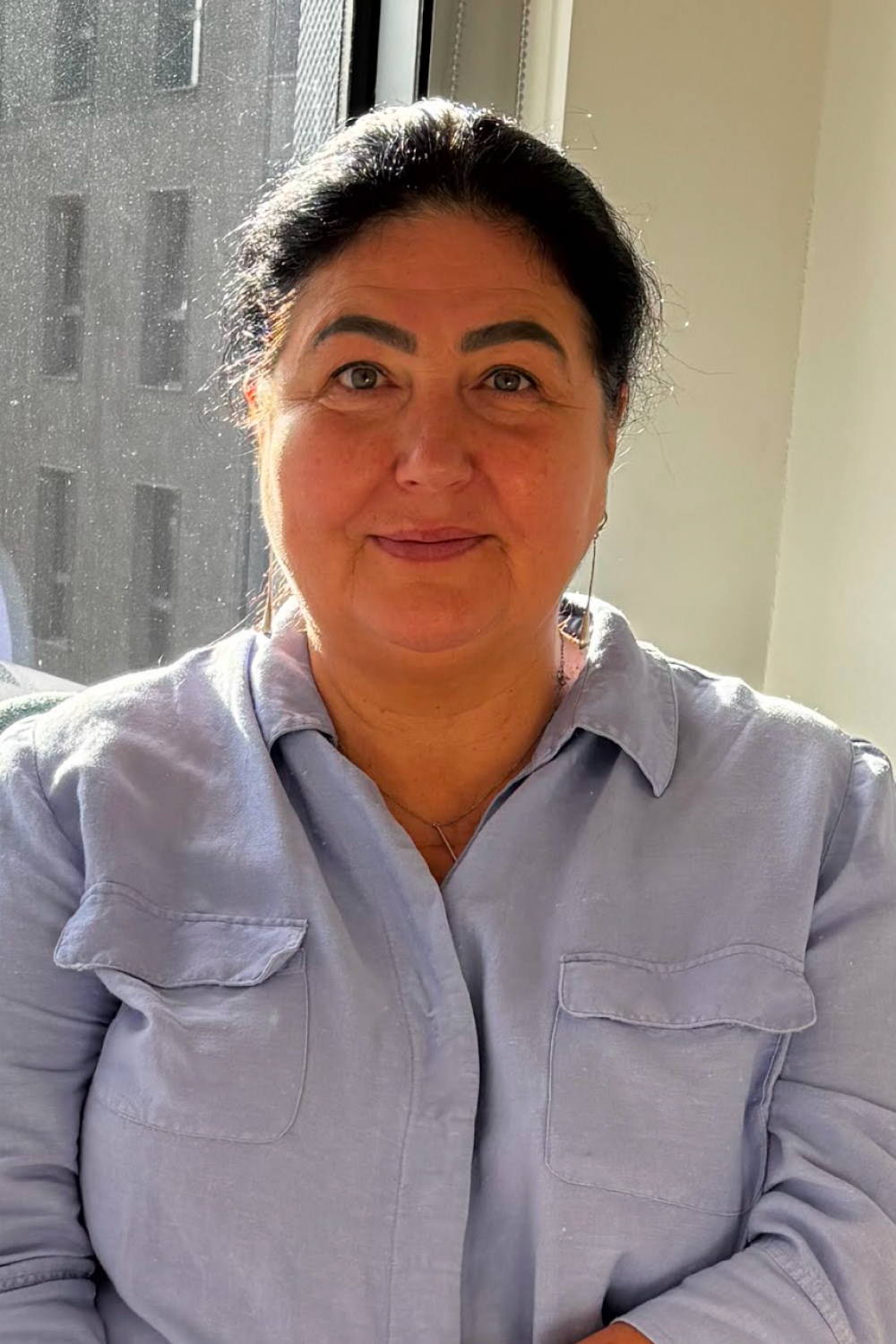
Про мене коротко
Дипломована психологиня та психотерапевтка з 25-річним досвідом індивідуальної та групової роботи. Працюю з дорослими, дітьми та сімʼями.
Освіта та підготовка:
Формат консультацій
Можна обрати формат, який комфортний саме вам: особисто, онлайн або по телефону.
• Формати:
особисто · онлайн · по телефону
• Підхід:
індивідуально, з повагою, без осуду та повчань
• Конфіденційність:
приватність і безпечний простір – обовʼязково
Вартість
Щоб не вигадувати цифри, залишаю тут місце для ваших реальних умов (пільги військовослужбовців).
Перша консультація – xx
xx хвилин
Коротко обговоримо запит і домовимось про формат подальшої роботи.
Подальші консультації – хх
хх хвилин
Поглиблена робота над вашим запитом у вибраному форматі.
Ви можете почати з одного звернення – без тиску та зобовʼязань.
Записатися на консультацію
Ми можемо спокійно познайомитись і обговорити ваш запит,
щоб зрозуміти, чи буде такий формат роботи для вас комфортним.
Оберіть зручний спосіб зв'язку:
Telegram
Дипломи та сертифікати
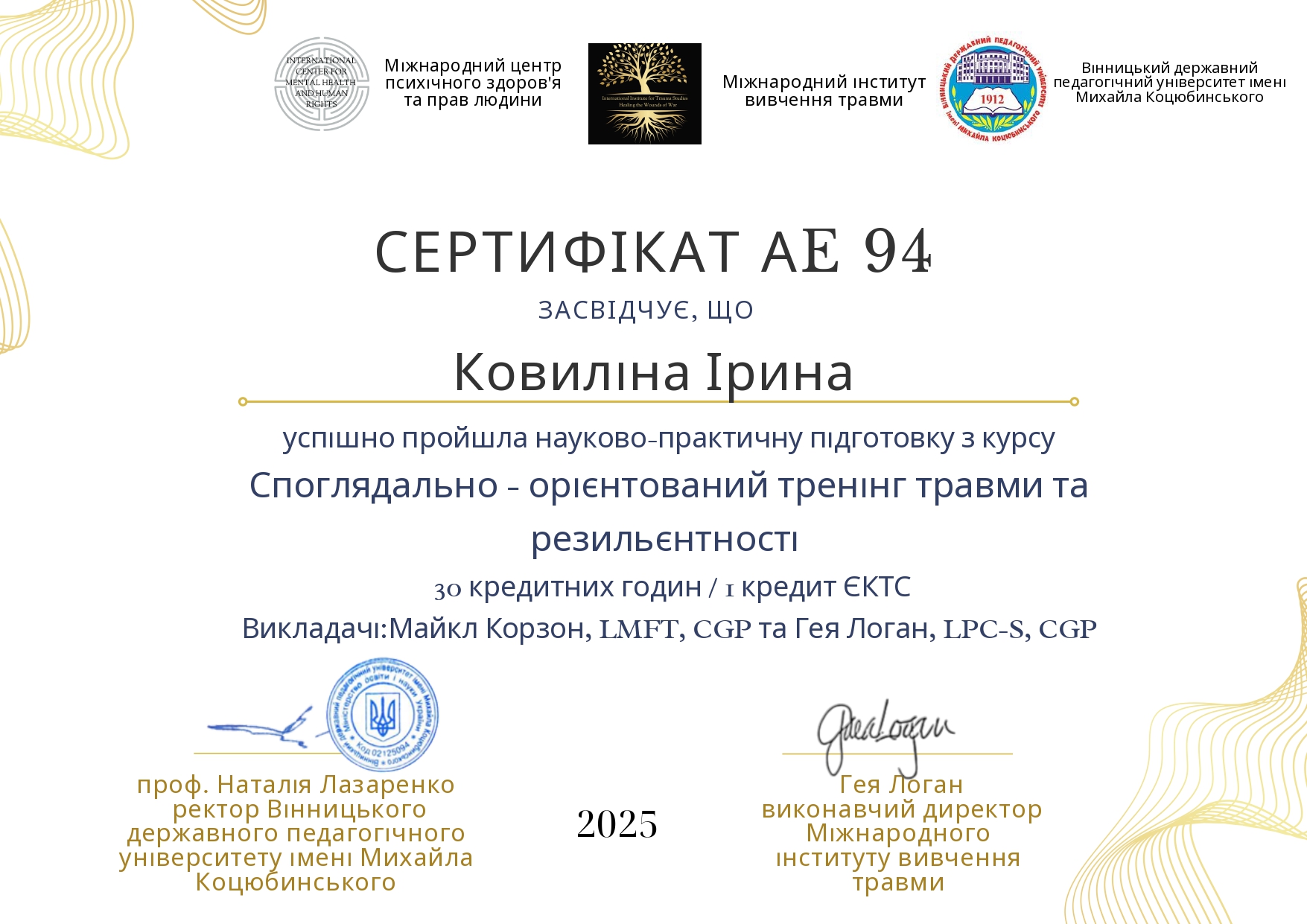
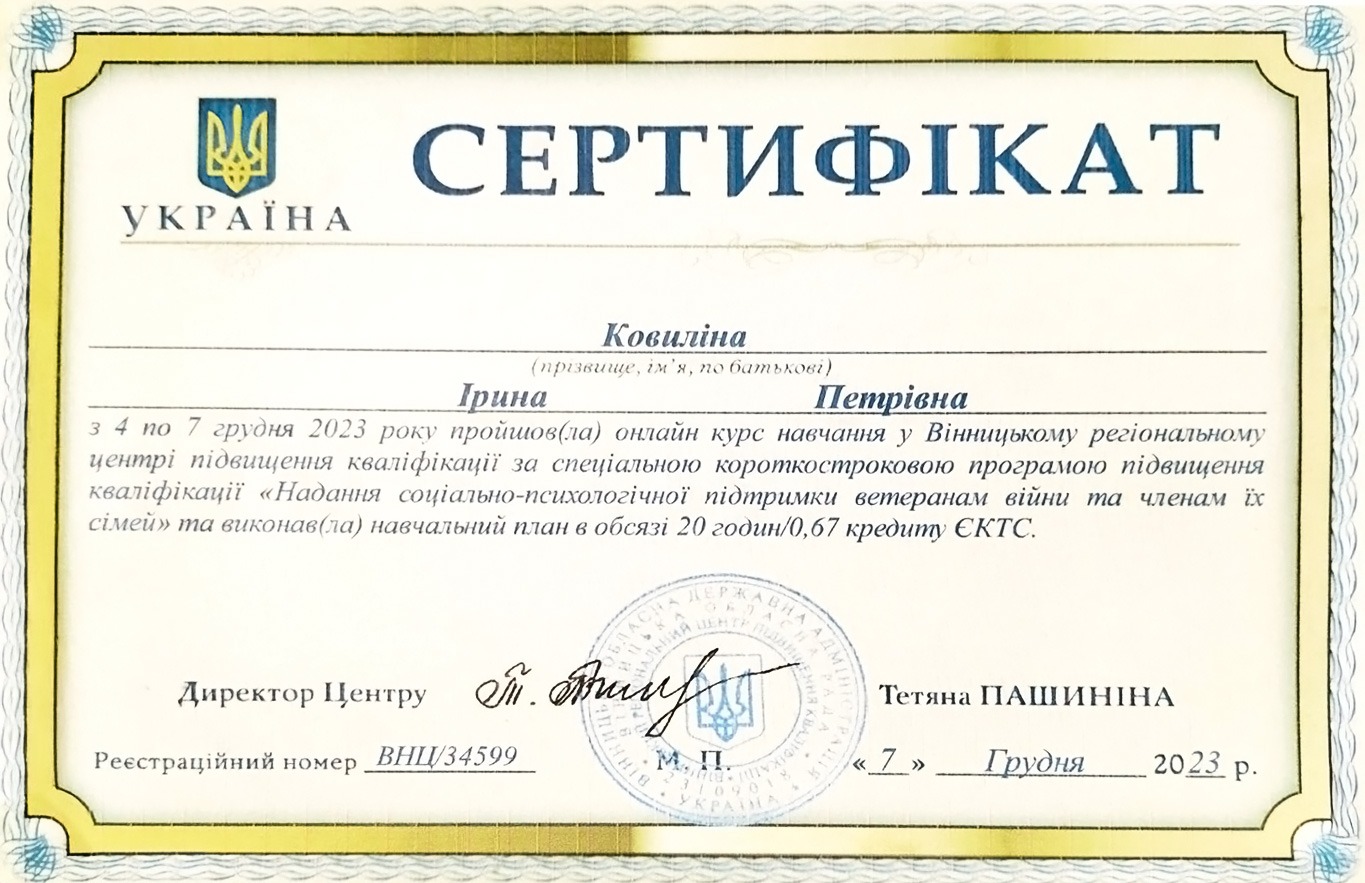
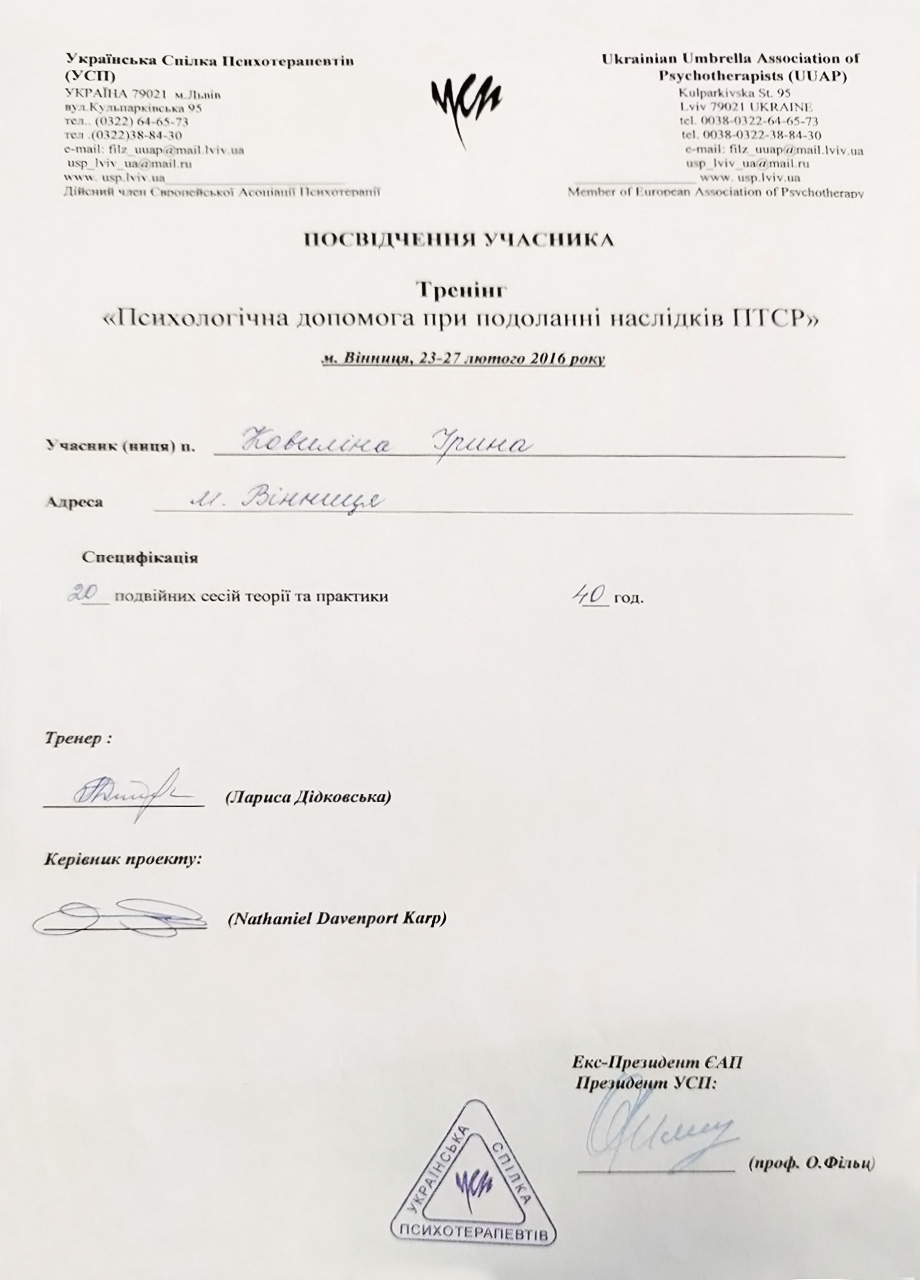
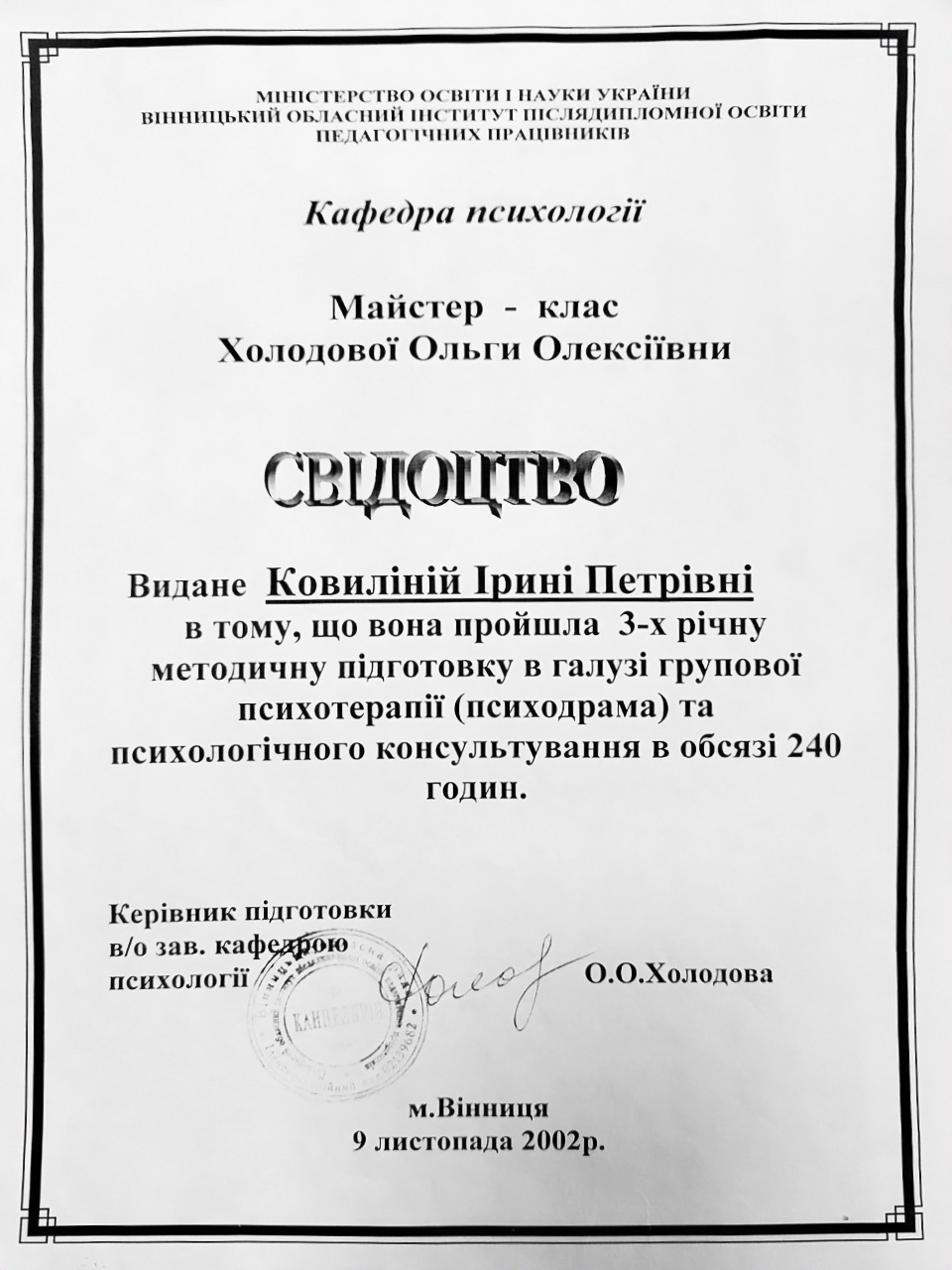
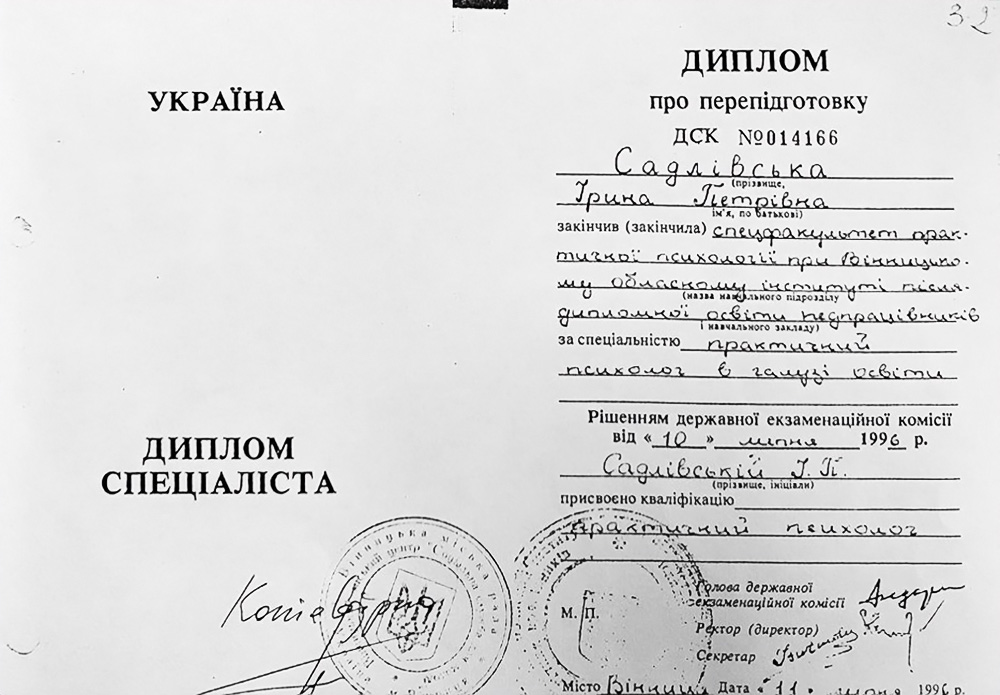
Маю базову освіту практичного психолога та багаторічну методичну підготовку в галузі психодрами й психологічного консультування. Протягом професійної діяльності постійно підвищую кваліфікацію у напрямках:
-
робота з травмою та ПТСР
-
психологічна допомога в умовах війни
-
підтримка ветеранів та їхніх родин
-
профілактика суїциду
-
подолання насильства в сім’ї
-
кризове консультування
-
робота з втратою та дистресом
Маю досвід участі в державних і міжнародних програмах з протидії торгівлі людьми, соціального супроводу сімей у складних життєвих обставинах та психосоціальної підтримки громад. Регулярно проходжу навчання, тренінги та супервізії, що дозволяє мені працювати відповідно до сучасних професійних стандартів.